
Replacement work scheduled against the capital plan, so the decision is made on a full-cost comparison rather than on the quote in front of you.
Who this is for
Maintenance / facility manager
You know which unit is next
You have been repairing the same equipment for years. The plan puts a replacement date and a cost range against it, so the replacement stops being an argument and becomes a line item.
Director of facilities
You need to defend the number
A replacement proposed in isolation looks like a large unplanned cost. The same replacement inside a prioritised plan, with the cost of waiting attached, is a decision with evidence behind it.

Repair versus replace on full cost
A full-cost risk analysis rather than a sticker-price comparison, including what it costs you to wait.
Scheduled into your budget cycle
Work timed against your fiscal year and your operating calendar, not against a failure.
Rigging and access planned first
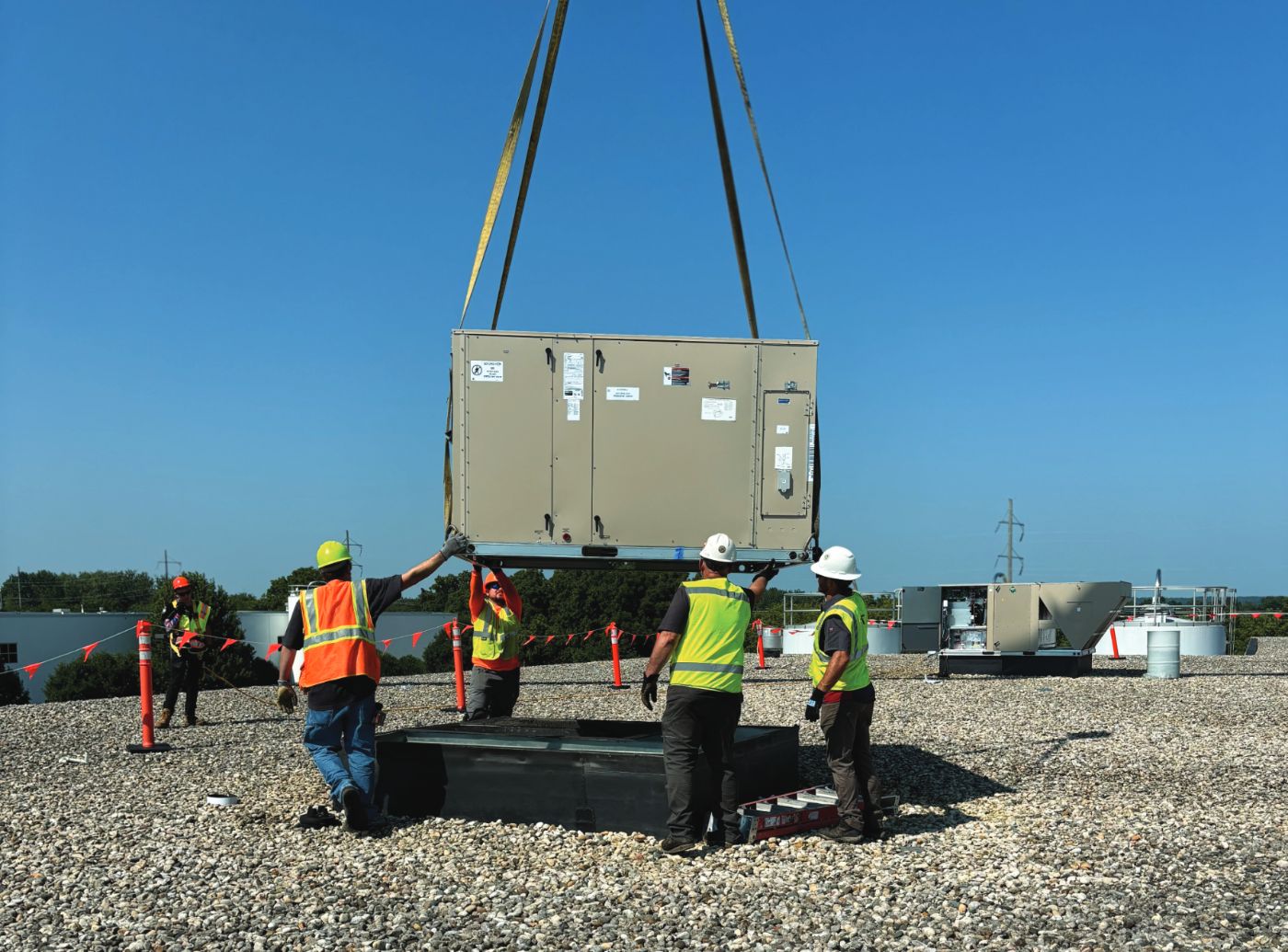
Crane, curb adapter and roof access sorted before the changeout, so the downtime window is the one you agreed to.
Rebate eligibility checked before specification
As a certified ICC energy efficiency measures installer we check incentives while the equipment is still being specified, not after.
The record stays current
The new unit goes into the equipment inventory with its own condition rating, so the plan stays live rather than ageing out.
The statuses this page is about
Replacement is the answer to the bottom two rows. A unit rated replacement candidate is not cost-effective to repair, and the plan says so before the failure rather than after it.
Equipment status board
Major repair likely
What it means
Major components showing wear. Failures increasing.
Your risk
High
What we do
Provide repair vs. replacement options. Evaluate long-term cost impact.
Replacement candidate
What it means
Severe aging or major failure. Not cost-effective to repair.
Your risk
Critical
What we do
Prepare replacement proposal. Prioritize in replacement pipeline.
How it connects
04
Proactive replacements
Changeouts scheduled into your budget cycle instead of into an emergency.
You are here
01
Condition assessment
We walk every roof and mechanical room and inventory what is actually there.
02
Written capital plan
Condition ratings, remaining useful life, a failure forecast and replacement cost ranges.
03
Service agreement
Maintenance scoped to the equipment the plan says needs it.
Questions we get
When does replacing beat repairing?
When the full cost of keeping the unit — the repairs, the efficiency loss and the risk of the failure landing at the worst moment — exceeds the cost of replacing it. That comparison needs the repair history, which is why the records matter.
How much downtime should I expect?
It depends on the unit, the roof and the access. The point of planning the changeout against the capital plan is that the window is agreed in advance and scheduled around your operation rather than dictated by a breakdown.
Can the work be timed around our shutdown?
Yes, and for some sectors that is the only workable option. Private education is scheduled into the summer window; distribution is scheduled around shipping peaks rather than into them.
Do you handle the rigging?
Yes. Crane, curb adaptation and roof access are part of the scope, planned before the changeout rather than discovered on the day.
What about rebates?
We are a certified energy efficiency measures installer through ICC, so incentives are identified during specification. Checking afterwards is usually too late to change what gets installed.